
Rural communities continue to face significant healthcare challenges, including provider shortages, hospital closures, limited access to specialty care and aging infrastructure. To address these issues, the Centers for Medicare & Medicaid Services (CMS) launched the Rural Health Transformation Program, a major federal investment aimed at improving rural healthcare access and systems.
Rural healthcare systems face persistent financial, workforce and infrastructure challenges that can limit access to care and worsen health outcomes. Hospital closures, provider shortages and long travel distances often make it difficult for residents to access healthcare services. At the same time, inadequate broadband connectivity, outdated health IT systems and interoperability barriers can hinder telehealth adoption and care coordination, making it harder for rural communities to benefit from emerging healthcare technologies and innovative care models.
These barriers have resulted in nearly 150 rural hospitals closing their doors or converting to non-acute care, reducing access to critical services for many communities. While the One Big Beautiful Bill Act (OBBBA) preserves existing Medicare rural support programs, it also introduces Medicaid financing changes that may create additional pressures for some providers.
To help address these challenges, CMS’ Rural Health Transformation Program provides $50 billion over five years (FY 2026–2030) to support state-led efforts aimed at strengthening rural healthcare systems. Through investments in workforce development, infrastructure modernization, technology adoption and innovative models of care delivery, the program seeks to improve access, quality and long-term sustainability across rural communities.
The Five Strategic Goals of the Program
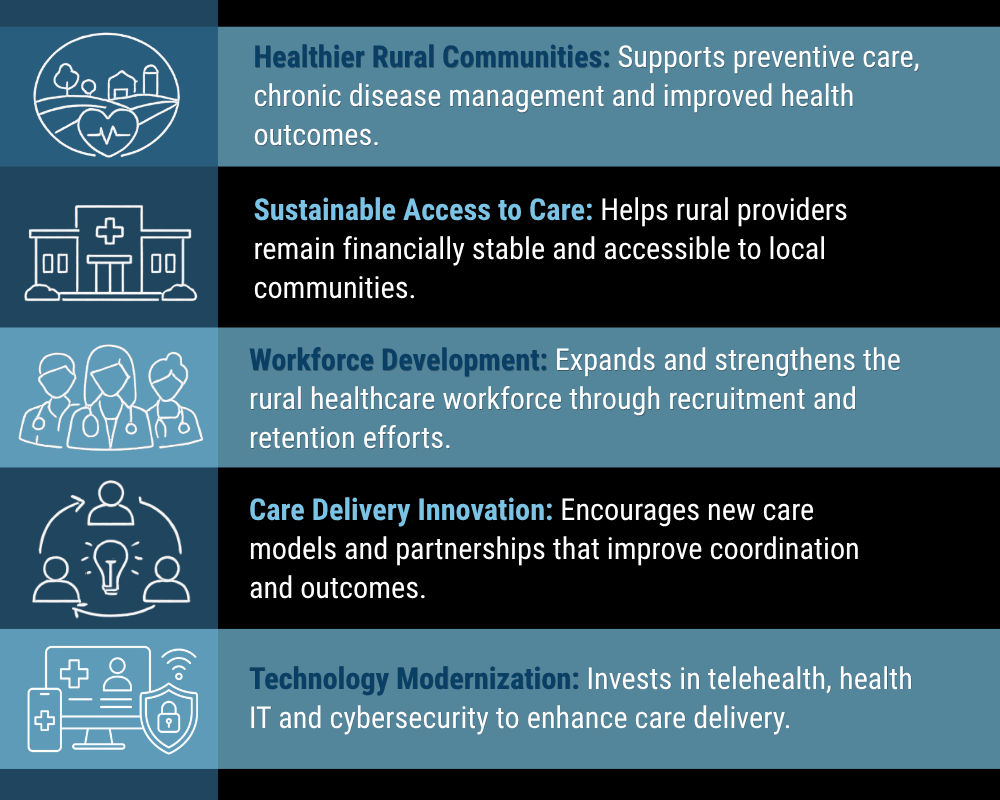
The Rural Health Transformation Program is built around five strategic priorities designed to create stronger, more sustainable healthcare systems in rural communities.
- Make Rural America Healthier: The program supports initiatives that improve preventative care, strengthen chronic disease management and address social and environmental factors that contribute to poor health outcomes.
- Sustainable Access to Care: This initiative helps rural providers improve financial and operational sustainability, ensuring communities can continue to access essential healthcare services close to home.
- Workforce Development: A key focus of the program is expanding the rural healthcare workforce through recruitment, training and retention strategies that help address ongoing provider shortages.
- Care Delivery Innovation: States are encouraged to implement innovative care models, strengthen partnerships and adopt value-based approaches that improve care coordination and patient outcomes.
- Technology and Infrastructure Modernization: The program supports investments in telehealth, modern health IT systems and cybersecurity enhancements, helping rural providers deliver more connected, efficient and secure care.
How States Are Planning to Use the Funding
While each state will develop a customized transformation plan, many are expected to focus on expanding access to care, strengthening the healthcare workforce and improving service delivery in underserved communities. Funding may support mobile health clinics, expanded behavioral health services, or community-based partnerships that help connect residents with care closer to home. States may also invest in workforce pipeline programs that create training opportunities, residency placements and recruitment incentives to address persistent provider shortages.
Many transformation plans are also expected to include investments in operational modernization and care coordination. Examples may include upgrading health IT systems, improving data sharing between providers, implementing remote patient monitoring programs, and adopting AI-assisted administrative tools that reduce paperwork and streamline routine tasks. Together, these initiatives can help rural healthcare organizations improve efficiency, expand access and build more sustainable care models for the future.
Technology Opportunities and Implementation Challenges in Rural Healthcare Transformation
Technology will play a key role in helping rural healthcare organizations achieve the goals of the Rural Health Transformation Program. Tools such as telehealth, AI, remote patient monitoring and interoperable health systems can improve access to care, increase efficiency and support better patient outcomes. However, realizing these benefits will require states and providers to address infrastructure, workforce and connectivity challenges while ensuring innovation remains patient centered. Successful transformation efforts will balance advanced technology with transparency and human oversight techniques, such as Human-in-the-Loop AI.
The Rural Health Transformation Program represents one of the largest federal investments in rural healthcare in recent history, creating a significant opportunity to strengthen access, sustainability and innovation across rural communities. By supporting long-term, state-led transformation efforts, the program aims to address longstanding challenges while building more resilient healthcare systems for the future.
Achieving these goals, however, will require strong collaboration among federal agencies, state governments, healthcare providers and technology partners. Together, these stakeholders can help create sustainable, accessible and modern care delivery models that improve health outcomes and ensure rural communities have access to the quality healthcare they need for years to come.