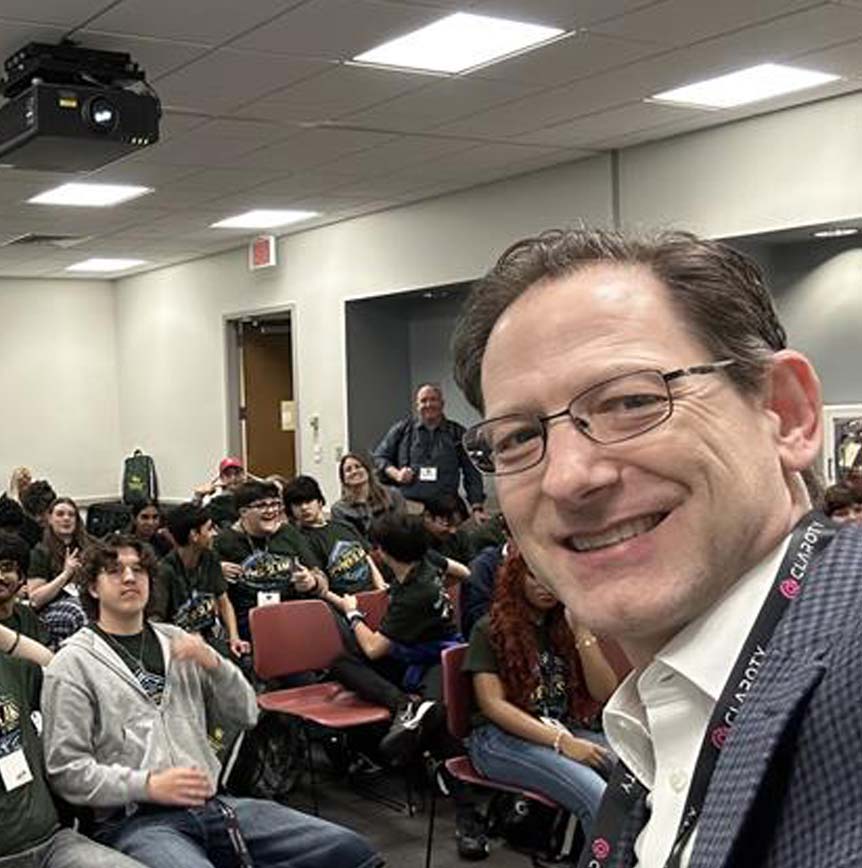
Every now and then, you get a glimpse of the future.
For me, that happened last month at CyberSlam 2026, a cyber learning event sponsored by Loudoun County Public Schools that attracts students (more than 600 of them) from all over Virginia.
This event had more energy than most conferences I attend as a professional!
I had the privilege of leading four sessions titled “Don’t Get Played,” focused on how the algorithms behind social media and online platforms are constantly learning about us. The question is whether they are learning the right things and what they are doing with that data.
And if we don’t understand that dynamic, it’s easy to get “played” by them.
But the real focus of the day was about digital awareness, critical thinking and the responsibility that comes with powerful technology.
Flipping the Digital Script
In the sessions, we talked about how platforms use algorithms to keep people engaged.
When you watch a video, like a post or pause on something that catches your attention, the system is learning. Those tiny signals help platforms decide what to show you next. Over time, they build a model of your interests and behavior.
That’s not necessarily bad. In many cases, it makes technology more useful. But it does mean that these systems are accumulating a lot of data about each of us. So, I challenged the students to think about how they can use those systems, those algorithms, to their advantage.
In other words, instead of getting played by the algorithm, you start programming the algorithms intentionally: giving them the data you want them to have and turning off tracking where you can.
The Next Generation Is Paying Attention
One of the things that impressed me most was how engaged the students were. From their questions to their own insights, they contributed to a thoughtful discussion about what it means to live and work with platforms that are always on and always watching what you do.
That level of curiosity and engagement is essential for students who are growing up in a world where AI and automated decision systems are everywhere.
From healthcare and transportation to education and public services, algorithms will increasingly shape how they use and engage with digital systems.
Technology Is Moving Fast. Understanding Must Keep Up.
Events like CyberSlam are important because they help bridge the gap between howtechnology works and how people experience it.
AI and data-driven systems can feel mysterious from the outside. I am constantly surprised by how many people haven’t been informed about the basics of how large language models and automated systems work. There is often a sense of mystery and magic associated with them.
But once you understand the basics, that these systems are built on the data available to them and a whole lot of math, the mystique starts to disappear.
Gaining that understanding is important for students and adults alike.
Why This Matters to the Work We Do at RELI
The conversation we had at CyberSlam might have been aimed at students, but the principles apply directly to the work we do with government agencies every day.
At RELI, we help organizations navigate emerging technologies like AI in a thoughtful and responsible way. One of the most important lessons we’ve learned is that technology should always serve a mission, not the other way around.
When agencies adopt AI with a clear mission like improving healthcare outcomes, strengthening program integrity, or protecting citizens, technology becomes a powerful tool for achieving real impact.
In other words, the same mindset we encouraged students to develop applies to organizations as well. The first step is understanding how the systems actually work, what incentives drive them and how the data behind them shapes outcomes.
Investing in the Future
Programs like CyberSlam exist because educators and industry leaders invest time and energy into creating opportunities for students to explore technology in meaningful ways.
For those of us in the technology field, these events are also a reminder that the future workforce is already forming its views about technology, ethics, and innovation.
Helping shape that conversation is both a privilege and a responsibility.
By the end of the day, after four sessions and a lot of great questions, it was clear that the next generation is more than ready to engage with the challenges of the digital world.
They’re curious. They’re thoughtful. And they’re paying attention.
That gives me a lot of optimism because the future of technology won’t just be shaped by today’s engineers and policymakers. It will also be shaped by informed citizens, especially young people, who understand how the systems around them work.
If CyberSlam 2026 is any indication, that future is in very capable hands.
And I’m already looking forward to CyberSlam 2027.