Welcome to RELI Group’s Leadership Spotlight series! In this series, we’ll delve into the background, passions and philosophies of some of Team RELI’s best and brightest minds. Each post includes the same five questions, offering a comprehensive glimpse into the folks that make RELI great.
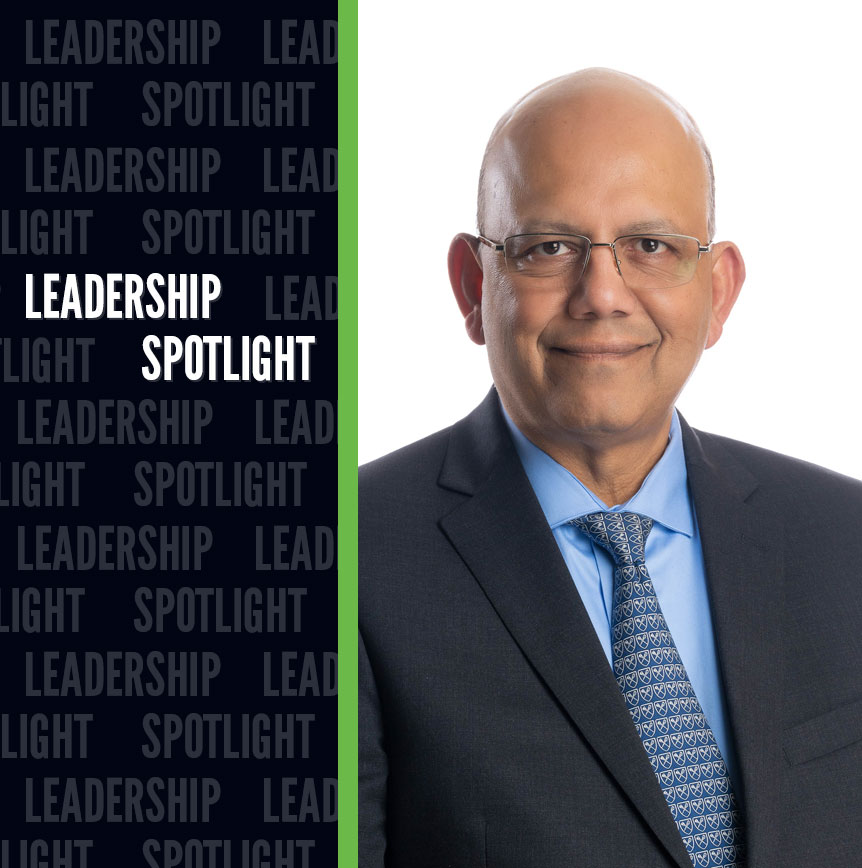
In today’s Leadership Spotlight, meet Sarjoo Shah, Client Executive Director for Citizen Services.
Sarjoo is a strategic and experienced executive with more than 35 years of leadership in public sector technology, driving growth in state health and entitlement markets and expanding fraud, waste and abuse prevention services. He brings deep expertise in digital transformation, enterprise architecture and operational leadership, consistently identifying opportunities for innovation, improving service delivery and driving measurable impact across government programs.
Can you share a pivotal moment in your career that influenced your path in public sector consulting?
A pivotal moment in my career came while leading work on the first nationally certified, fully automated Child Welfare system, a major modernization effort in Health and Human Services. Until then, all 50 states largely relied on paper-based processes with minimal automation. Building this system brought federal reviewers to evaluate it, and they certified it as meeting all national requirements, marking a milestone not only in technology but in establishing a model for how government systems can elevate service delivery.
What made the experience transformative for me was seeing firsthand how technological decisions directly affect vulnerable children and the state’s ability to protect them. Coming to the U.S. from India, I had little initial understanding of child welfare, but through designing the system I learned deeply about how agencies intervene in cases of abuse and neglect. That understanding reshaped my approach to public sector consulting, reinforcing that it is not just about systems integration, but translating policy into operational reality while safeguarding compliance, fiscal responsibility and meaningful human outcomes.
What drives your passion for working in government contracting?
A defining realization in my career came from understanding who government truly serves: vulnerable children, adults and elderly individuals who rely on public programs not as handouts, but as lifelines. Early in my work, I spent a week on the help desk taking calls from caseworkers and families. Hearing their challenges directly grounded me in the human reality behind systems like Medicaid, SNAP and Child Welfare. These programs help stabilize families in crisis, providing the foundation through which a person can become independent.
That perspective fuels my passion for public sector consulting. Government programs operate at massive scale and require navigating federal guidance, state regulations, budget constraints and diverse stakeholder needs. I find that complexity energizing because it demands disciplined frameworks, structured governance and close collaboration across policy, operations and IT. I’m particularly motivated by strengthening program integrity, because fraud, waste and abuse undermine public trust and take resources away from the people who need them most. By applying analytics and AI responsibly, we can protect taxpayer dollars while ensuring critical services remain accessible, effective and grounded in their core purpose: improving lives.
How do you approach leadership and team building?
My leadership approach is grounded in clarity, accountability and shared ownership. I believe teams perform best when they clearly understand the mission, the metrics that define success and how their individual contributions connect to broader organizational goals. I focus on creating alignment through a clear operating model, defined roles and measurable outcomes so teams can move forward with confidence and purpose.
I also prioritize capability building and collaboration. This includes investing in structured methodologies, reusable playbooks and continuous learning, especially around AI, data governance and compliance frameworks, while encouraging strong cross-functional engagement between policy experts, technologists, data scientists and program leaders. Transparency is equally important in complex government environments. Openly discussing risks, constraints and tradeoffs helps teams make informed decisions and maintain credibility with clients.
What innovations or trends in the public sector excite you the most?
Several trends stand out in the evolving intersection of technology and government services. AI-driven program integrity is becoming increasingly important, using advanced analytics and machine learning to detect anomalous billing, eligibility discrepancies and emerging risk patterns. At the same time, agentic AI and automation are introducing structured workflows that support investigators, case workers and program managers with tasks such as evidence gathering, case triage and documentation. These innovations are supported by AI-ready data frameworks that move beyond isolated pilots toward enterprise data strategies focused on governance, data lineage and explainability. Together, these technologies have tremendous potential to help government operate faster, more efficiently and ultimately at a lower cost.
Another key trend is the convergence of policy and technology, where systems are expected to adapt quickly to federal mandates and regulatory changes without requiring large-scale rework. What excites me most is not just the technology itself, but the opportunity to implement it responsibly. By aligning innovation with guardrails, agencies can leverage AI to improve operational efficiency while maintaining transparency, accountability and public trust.
Can you discuss a project or initiative you’re particularly proud of?
One initiative I am particularly proud of is building the “ERP” of Human Services. This was a very large initiative which required buy-in from seven State departments and three federal agencies. This project called OK Benefits would have brought seven Human Services programs under one roof, minimizing dual entry and maximizing data sharing and interoperability. The initiative combined policy analysis, data architecture design and risk to improve verification accuracy, reduced manual review burden and enhanced audit defensibility.
Beyond the technical solution, I am proud of the cross functional collaboration it required. We brought together compliance experts, data engineers and program leaders to design a model that is both innovative and practical for state agencies. The most rewarding aspect is knowing that these efforts strengthen oversight while preserving access to essential services for eligible individuals.